custom tea boxes
Packaging is an important part of building a successful tea brand. Whether a business sells herbal tea, green tea, black tea, premium loose-leaf blends, or tea bags, the packaging must protect product quality while creating an attractive presentation. Custom tea boxes offer businesses an opportunity to combine product protection, professional branding, and convenient storage in one packaging solution.
However, the cost of custom tea boxes can vary significantly depending on several factors. Material selection, box dimensions, printing methods, finishing options, structural design, and order quantity all influence the final price. Understanding these elements helps businesses plan their packaging budgets and choose solutions that match their product requirements.
In this article, we explore the main factors affecting the cost of custom tea boxes and explain how tea businesses can manage packaging expenses without compromising quality.
1. Packaging Material Selection
The material used to manufacture custom tea boxes is one of the most important factors influencing their cost. Different materials offer different levels of strength, appearance, print quality, and product protection.
Cardboard
Cardboard is a popular option for tea packaging because it is versatile, lightweight, and suitable for different printing techniques. It works well for tea bags, small tea collections, and retail packaging.
Its cost depends on board thickness, quality, finish, and overall construction.
Kraft Paperboard
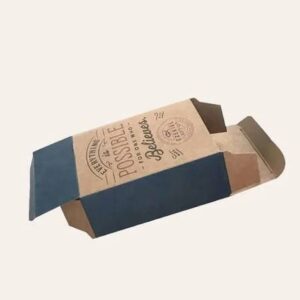
Kraft paperboard provides a natural appearance that suits organic, herbal, and traditional tea brands. It can be used for simple packaging designs and customized with logos, product information, and illustrations.
The price depends on the material grade, thickness, and whether additional coatings or treatments are required.
Rigid Board
Rigid board is thicker and sturdier than standard folding carton materials. It is commonly used for premium tea gift boxes and luxury tea collections.
Because it generally requires more material and additional manufacturing steps, rigid packaging may cost more than standard cardboard boxes.
Corrugated Cardboard
Corrugated cardboard provides additional structural protection. It is more commonly used for shipping cartons or larger tea packaging solutions than for ordinary retail tea boxes.
Businesses should select materials according to product weight, storage requirements, presentation goals, and budget.
2. Box Size and Dimensions
The size of a custom tea box directly affects the amount of material required during production. Larger boxes generally use more board, while smaller packaging may require less material.
However, the dimensions should also accommodate the tea product and any internal packaging.
For example:
- Small tea bag boxes require compact dimensions.
- Loose-leaf tea boxes may need space for an inner pouch or container.
- Assorted tea gift boxes require additional room for multiple varieties.
- Premium tea collections may need larger compartments and protective inserts.
Custom dimensions can improve material efficiency by reducing unnecessary empty space. However, unusual sizes may require additional cutting, tooling, or setup depending on the production process.
Accurate measurements help businesses avoid unnecessary packaging expenses and ensure that the tea fits securely inside the box.
3. Box Style and Structural Design
The structure of custom tea boxes also influences manufacturing costs. Simple box styles are generally easier to produce, while complex structures may require additional materials, cutting, folding, and assembly.
Popular tea box styles include:
Straight Tuck-End Boxes
These boxes feature flaps that tuck into the top and bottom. They are suitable for many standard tea bag and retail packaging applications.
Reverse Tuck-End Boxes
Reverse tuck-end boxes have top and bottom flaps that close in opposite directions. They are a common choice for lightweight retail products.
Sleeve Boxes
Sleeve boxes feature an outer cover that slides over an inner tray. They provide a clean presentation and are suitable for premium tea packaging.
Drawer-Style Boxes
Drawer-style boxes include a sliding inner compartment. They can create a premium unboxing experience for specialty tea collections.
Two-Piece Rigid Boxes
These boxes feature a separate lid and base. They are often selected for luxury tea gifts and special product collections.
Complex structures may increase production costs because they can require additional components and assembly work. Businesses should choose a design that matches their presentation requirements without adding unnecessary complexity.
4. Printing Method and Color Requirements
Printing is another important factor affecting the cost of custom tea boxes. The selected printing method, number of colors, artwork complexity, and production quantity can all influence the final price.
Offset Printing
Offset printing is suitable for high-quality packaging with detailed graphics and consistent color reproduction. It is commonly used for larger production runs.
Digital Printing
Digital printing works well for smaller quantities, customized designs, and packaging that requires variable artwork. It may be suitable for new tea brands testing different packaging concepts.
Flexographic Printing
Flexographic printing can be used for certain paper-based packaging applications, depending on the material, artwork, and production requirements.
Screen Printing
Screen printing may be suitable for selected designs that require specific visual effects or strong color coverage.
The best printing method depends on the desired appearance, material, order quantity, and production budget.
5. Number of Colors in the Design
The complexity of the printed design can affect packaging costs. Some printing methods have different setup and production requirements depending on the number of colors used.
A simple design with one or two colors may be more economical for certain production processes. Designs with multiple colors, detailed illustrations, gradients, and photographic images may require more complex printing arrangements.
However, the relationship between color count and cost depends on the printing technology. Digital printing, for example, does not necessarily become more expensive simply because a design contains additional colors.
Businesses should focus on creating a balanced design that communicates their brand identity without adding unnecessary complexity.
6. Special Finishing Options
Finishing techniques can make custom tea boxes look more attractive and premium. However, additional finishing processes may increase manufacturing expenses.
Common finishing options include:
Matte Lamination
Matte lamination creates a smooth, non-glossy appearance. It is suitable for minimalist tea packaging and premium branding.
Gloss Lamination
Gloss lamination adds shine and can make printed colors appear more vibrant. It is often used for colorful retail tea boxes.
Foil Stamping
Gold, silver, and other metallic foils can highlight logos, product names, and decorative elements. This technique is popular for luxury tea gift packaging.
Embossing and Debossing
Embossing raises selected design elements, while debossing presses them into the material. Both techniques add texture and can improve the tactile appeal of packaging.
Spot UV Coating
Spot UV applies a glossy coating to selected areas of the design. It can help logos and graphics stand out against a matte background.
Using multiple finishing techniques can increase costs. Businesses should select only the effects that contribute meaningfully to the packaging’s appearance and brand positioning.
7. Custom Inserts and Internal Compartments
Some tea boxes require internal components to organize and protect different products. Inserts and dividers can make packaging more functional, but they may increase material and production expenses.
Custom inserts are particularly useful for:
- Assorted tea bag collections
- Multiple loose-leaf tea varieties
- Premium tea gift sets
- Tea sampler boxes
- Tea and accessory combinations
Businesses can choose suitable paperboard dividers, cardboard inserts, or other food-safe packaging components according to the product requirements.
For tea products that use individual inner pouches, the outer box may need enough space to accommodate those components without crushing or damaging them.
The number, shape, and material of inserts all influence the final packaging cost.
8. Order Quantity and Production Volume
The quantity ordered has a significant impact on the cost per custom tea box. Packaging manufacturers often have setup expenses related to printing, cutting, tooling, and production preparation.
When these expenses are distributed across a larger order, the cost per unit may decrease.
Small Production Orders
Small orders are useful for startups, seasonal products, and businesses testing new packaging designs. However, the cost per box may be higher because setup expenses are spread across fewer units.
Medium Production Orders
Medium-sized orders can offer a balance between inventory requirements and unit pricing. They are suitable for growing tea brands with regular packaging demand.
Large Bulk Orders
Bulk production may reduce the per-unit cost because manufacturing resources and setup expenses are distributed across more boxes.
However, businesses should consider storage space, product demand, cash flow, and the risk of holding excess packaging inventory.
The best order quantity is one that balances unit pricing with realistic sales expectations.
9. Food Safety and Product Protection Requirements
Tea is a food product, so packaging must be suitable for its storage and handling requirements. The packaging should protect the tea from moisture, contamination, light, odors, and other factors that may affect product quality.
The required level of protection can influence the packaging structure and material selection.
For example, businesses selling loose-leaf tea may use an outer cardboard box with a separate inner pouch that provides the required barrier properties.
Important considerations include:
- Moisture protection
- Suitable food-contact materials
- Odor and contamination control
- Light protection where required
- Secure closures
- Storage conditions
- Product shelf-life requirements
Not every cardboard box needs to directly contact the tea. If the tea is sealed inside an appropriate inner pouch, the outer box can primarily serve as secondary packaging.
Businesses should verify that all materials intended for direct food contact meet applicable food safety requirements.
10. Quantity and Complexity of Artwork
The artwork used on custom tea boxes can also influence the production process and overall cost. Detailed illustrations, multiple design panels, special patterns, and customized product information may require additional design preparation.
Businesses may need separate packaging artwork for different tea flavors, varieties, or product collections.
For example, a tea brand selling green tea, black tea, chamomile tea, and peppermint tea may use a consistent box structure while changing the colors and product information for each variety.
Design costs may increase when businesses require:
- Multiple unique packaging designs
- Complex illustrations
- Custom typography
- Detailed product graphics
- Extensive artwork revisions
- Multiple language versions
Using a consistent packaging template with selected variations can help maintain brand identity and simplify production planning.
11. Eco-Friendly Materials and Sustainable Packaging Choices
Many tea businesses are exploring sustainable packaging options to reduce unnecessary waste and appeal to environmentally conscious customers.
Eco-friendly custom tea boxes can use recyclable paperboard, recycled-content materials, and responsibly sourced paper-based components.
However, the cost depends on material availability, quality, certifications, and the overall packaging structure.
Businesses may consider:
- Recyclable cardboard
- Kraft paperboard
- Recycled-content paper materials
- Reduced packaging components
- Right-sized box designs
- Printing and finishing compatible with recycling requirements
Coatings, adhesives, laminations, and mixed-material components can affect recyclability. Businesses should review the complete packaging structure rather than assuming that every paper-based box is automatically recyclable.
Sustainable packaging should also maintain adequate product protection and food safety.
12. Customization and Personalization Requirements
Some tea brands require packaging tailored to specific customers, events, or promotional campaigns. Personalized designs can make packaging more distinctive but may increase production costs depending on the quantity and customization method.
Examples include:
- Personalized tea gift boxes
- Corporate tea gift packaging
- Seasonal tea collections
- Wedding favor tea boxes
- Limited-edition packaging
- Promotional sampler boxes
Digital printing may be useful for selected short-run personalization projects, while larger campaigns may benefit from conventional printing methods.
Businesses should compare the costs of customization against the marketing and customer experience benefits it provides.
13. Manufacturing and Delivery Location
The location of the packaging manufacturer can influence the total cost of custom tea boxes. Production expenses, transportation charges, import duties, taxes, and delivery times vary between regions.
When comparing suppliers, businesses should consider more than the quoted price per box.
Important factors include:
- Manufacturing location
- Shipping and freight charges
- Import duties and taxes
- Production lead time
- Minimum order quantity
- Packaging quality
- Supplier reliability
A supplier offering a lower unit price may not necessarily provide the lowest total cost once transportation and other expenses are included.
Requesting a complete quotation helps businesses understand the overall investment.
14. How to Reduce the Cost of Custom Tea Boxes
Businesses can manage packaging expenses without compromising product quality by making practical design and purchasing decisions.
Here are some useful strategies:
Choose appropriate materials: Select a material that provides sufficient strength and appearance without unnecessary thickness.
Use practical box structures: Simple folding cartons may be more economical than complex multi-component designs.
Optimize box dimensions: Accurate sizing can reduce material consumption and storage requirements.
Limit unnecessary finishes: Use premium effects selectively instead of applying several decorative treatments.
Standardize packaging designs: Use consistent structures across different tea varieties where possible.
Order suitable quantities: Compare bulk pricing while considering storage space and actual demand.
Request samples: Testing a sample before bulk production can help avoid expensive design or structural mistakes.
Compare complete quotations: Evaluate setup fees, printing, finishing, delivery, and other charges rather than focusing only on the unit price.
Conclusion
The cost of custom tea boxes depends on several factors, including material selection, dimensions, box style, printing methods, finishing options, inserts, order quantity, and product protection requirements. Each decision affects the final packaging price and should be evaluated according to the needs of the tea brand.
Businesses can manage their budgets by choosing practical materials, optimizing box dimensions, selecting suitable printing techniques, and ordering quantities based on realistic demand. At the same time, they should prioritize food safety, product protection, and attractive presentation.
Well-designed custom tea boxes can do more than contain a product. They can strengthen brand recognition, communicate product quality, and create a professional retail experience. By understanding the factors that affect packaging costs, tea businesses can make informed decisions and invest in packaging that supports long-term growth.
Frequently Asked Questions (FAQs)
1. What Factors Affect the Cost of Custom Tea Boxes?
The main factors include material quality, box dimensions, structural design, printing methods, number of colors, finishing options, inserts, order quantity, and delivery expenses.
2. Which Material Is Most Affordable for Custom Tea Boxes?
Standard cardboard and suitable kraft paperboard are common options for cost-conscious tea packaging. The actual price depends on material thickness, quality, availability, and production quantity.
3. Are Custom Tea Boxes More Expensive Than Standard Packaging?
Custom tea boxes may cost more initially because they involve customized dimensions, printing, and production setup. However, they offer greater design flexibility, branding opportunities, and product-specific sizing.
4. Does Ordering Custom Tea Boxes in Bulk Reduce the Cost?
Yes, bulk ordering can reduce the cost per unit because setup and production expenses are distributed across more boxes. Businesses should still consider storage capacity and expected demand.
5. Which Printing Method Is Best for Custom Tea Boxes?
Offset printing is suitable for many larger production runs, while digital printing can be useful for smaller orders and personalized designs. The best option depends on quantity, artwork, material, and budget.
6. Do Special Finishes Increase the Price of Tea Boxes?
Yes. Finishes such as foil stamping, embossing, debossing, matte lamination, gloss lamination, and spot UV may increase production costs because they require additional processes or materials.
7. Are Kraft Tea Boxes Suitable for Premium Brands?
Yes. Kraft tea boxes can create a natural and elegant appearance. With suitable printing, typography, and finishing, they can support both traditional and premium tea branding.
8. Do Custom Tea Boxes Need Food-Grade Materials?
Materials that directly contact tea must meet applicable food-contact safety requirements. If the tea is sealed inside a suitable inner pouch, the outer box may serve as secondary packaging.
9. How Can Businesses Reduce Custom Tea Box Packaging Costs?
Businesses can reduce costs by selecting practical materials, optimizing box dimensions, using simple structures, limiting unnecessary finishes, standardizing designs, and ordering suitable quantities.
10. How Can I Get an Accurate Quote for Custom Tea Boxes?
Provide the packaging supplier with your required box dimensions, material preference, box style, printing artwork, finishing options, order quantity, and delivery location. Requesting a sample and a detailed quotation can help you evaluate the total cost before placing an order.