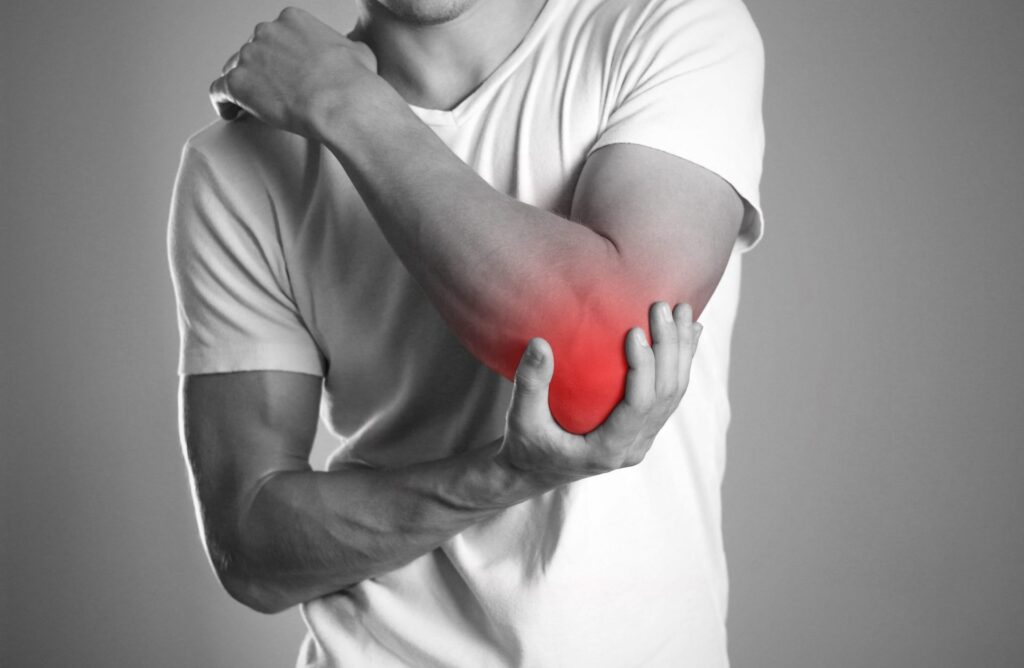
Tennis elbow is a common condition affecting the outer part of the elbow and can make everyday movements such as gripping, lifting, typing, opening containers, carrying objects, or playing sports uncomfortable. Despite its name, tennis elbow is not limited to tennis players. Repetitive wrist and forearm movements, manual work, racquet sports, and other activities that repeatedly load the forearm muscles can contribute to the condition.
Modern rehabilitation focuses on understanding the individual’s symptoms, identifying contributing activities, improving forearm strength and endurance, and gradually restoring normal function. For people exploring Tennis Elbow Treatment Dubai, physiotherapy can provide a structured approach that combines assessment, exercise, movement education, activity modification, and progressive loading.
At Vitruvian Italian Physiotherapy Center, treatment can be adapted to the patient’s physical condition, daily requirements, occupation, sporting activities, and recovery goals.
The Tennis Elbow Treatment cost in Dubai can vary depending on the complexity of the condition, assessment requirements, number of sessions, treatment methods, and duration of rehabilitation. Understanding the complete treatment pathway can help patients approach their recovery with clearer expectations.
Understanding Tennis Elbow
Tennis elbow is commonly associated with lateral elbow tendinopathy, a condition involving the tendons and muscles responsible for extending the wrist and fingers. Repetitive loading of these structures can contribute to pain and reduced function around the outer elbow.
The condition can develop gradually rather than following one specific injury. Activities involving repeated gripping, lifting, twisting, typing, tool use, or racquet sports may increase the workload placed on the forearm.
Common symptoms include:
- Pain around the outer elbow
- Discomfort when gripping objects
- Pain while lifting
- Reduced grip strength
- Discomfort during wrist movements
- Difficulty with repetitive arm activities
- Tenderness around the outer elbow
- Reduced tolerance for sports or work activities
Because several conditions can produce similar elbow symptoms, an appropriate assessment is important before beginning a rehabilitation programme.
What Causes Tennis Elbow?
Tennis elbow is often associated with repeated loading of the forearm muscles and tendons. It can occur when the amount or intensity of activity increases faster than the tissues can adapt.
Potential contributing activities include:
- Repetitive gripping
- Frequent wrist extension
- Lifting and carrying
- Using hand tools
- Repetitive computer or hand movements
- Gardening
- Racquet sports
- Throwing activities
- Sudden increases in exercise volume
The condition is therefore not limited to athletes. Occupational and everyday activities can also contribute to the repetitive loading associated with lateral elbow tendinopathy.
For individuals considering Tennis Elbow Treatment Dubai, identifying activities that may be contributing to symptoms can be an important part of treatment planning.
Why a Physiotherapy Assessment Is Important
An individualized assessment allows a physiotherapist to understand how the elbow problem affects movement and function.
The assessment may consider:
- Pain location
- Pain during specific activities
- Elbow and wrist range of motion
- Grip strength
- Forearm strength
- Functional limitations
- Work requirements
- Sporting activities
- Recent changes in activity
- Previous injuries
Clinical practice guidance for lateral elbow tendinopathy recommends assessing measures such as elbow and wrist range of motion, pain-free grip strength, and maximum grip strength, along with appropriate patient-reported functional measures.
At Vitruvian Italian Physiotherapy Center, assessment can provide the foundation for creating a rehabilitation programme that matches the patient’s specific requirements.
Activity Modification for Better Recovery
Continuing exactly the same repetitive activity that aggravates the elbow may make it difficult for symptoms to settle. However, complete inactivity is not necessarily the goal either.
Modern rehabilitation often uses relative activity modification, meaning that aggravating loads are adjusted while appropriate movement is maintained.
This may involve:
- Reducing repetitive gripping temporarily
- Adjusting lifting techniques
- Modifying training volume
- Taking appropriate breaks
- Changing repetitive work tasks where possible
- Gradually rebuilding activity tolerance
The objective is to manage the amount of stress placed on the affected tissues while maintaining appropriate physical activity.
For someone researching Tennis Elbow Treatment Dubai, understanding activity modification can be an important part of the rehabilitation process.
Progressive Strengthening for the Forearm
Exercise-based rehabilitation is an important component of contemporary tennis elbow management. Clinical practice guidance recommends resisted wrist-extensor exercises, including isometric, concentric, and eccentric approaches, for appropriate patients with subacute or chronic lateral elbow tendinopathy.
A strengthening programme may target:
- Wrist extensors
- Wrist flexors
- Forearm muscles
- Grip strength
- Shoulder muscles
- Scapular muscles
- General upper-limb endurance
Exercises are usually progressed gradually according to symptoms and physical capacity.
The objective is to improve the ability of the forearm to tolerate the demands placed on it during work, exercise, sport, and everyday activities.
Isometric Exercises for the Elbow and Wrist
Isometric exercises involve producing muscular force without significant joint movement. They may be incorporated into rehabilitation when movement or loading is initially uncomfortable.
For example, a patient may perform a controlled wrist-extension contraction against resistance while keeping the wrist relatively still.
The exercise intensity can be adjusted according to the individual’s current tolerance.
As symptoms and strength improve, rehabilitation may progress toward dynamic resistance exercises.
This gradual approach allows Tennis Elbow Treatment Dubai to be adapted to different stages of recovery instead of using the same exercise intensity from the beginning.
Concentric and Eccentric Strengthening
As rehabilitation progresses, dynamic exercises can help develop strength and load tolerance in the forearm.
Concentric exercises involve muscle shortening while producing force, while eccentric exercises involve the muscle controlling movement as it lengthens.
A progressive programme may gradually increase:
- Resistance
- Repetitions
- Sets
- Range of motion
- Exercise complexity
- Functional demands
Evidence-based physiotherapy guidance supports resisted wrist-extensor strengthening for lateral elbow tendinopathy.
The appropriate exercise selection and progression depend on the patient’s symptoms, physical findings, and activity goals.
Improving Grip Strength
Grip strength is often relevant because many everyday and sporting activities require the hand and forearm to work together.
Tennis elbow may make gripping painful or reduce the amount of force a person can comfortably produce.
Rehabilitation may gradually introduce grip exercises such as:
- Controlled squeezing
- Resistance-based gripping
- Functional carrying
- Wrist strengthening
- Progressive lifting tasks
Grip training should be progressed appropriately rather than increasing resistance too quickly.
A physiotherapist can monitor grip strength and functional tolerance throughout rehabilitation.
Improving Wrist and Forearm Mobility
Although strengthening is an important part of treatment, mobility can also be considered when the assessment identifies restrictions.
Exercises may address:
- Wrist flexion
- Wrist extension
- Forearm rotation
- Elbow movement
- General upper-limb mobility
Improving movement can help patients perform everyday activities more comfortably and prepare the arm for progressive strengthening.
The rehabilitation plan should remain individualized because not every person with tennis elbow has the same mobility limitations.
The Role of Manual Therapy
Manual therapy may sometimes be incorporated into physiotherapy for lateral elbow pain. Depending on the patient’s presentation, a therapist may use appropriate hands-on techniques alongside active rehabilitation.
However, evidence regarding manual therapy and prescribed exercise varies, and recent Cochrane evidence found only low-certainty evidence for small improvements in pain and disability with these approaches.
This supports viewing manual techniques as one possible component of a broader rehabilitation programme rather than assuming that hands-on treatment alone will restore function.
At Vitruvian Italian Physiotherapy Center, treatment can be selected according to the patient’s assessment and functional requirements.
Using Exercise to Restore Joint Function
The primary goal of rehabilitation is not simply to perform exercises. It is to help the patient use the arm more effectively during real-life activities.
Functional rehabilitation can involve:
- Lifting objects
- Carrying items
- Opening containers
- Using tools
- Typing
- Reaching
- Household activities
- Gym exercises
- Racquet-sport movements
Exercises can gradually become more similar to the activities that caused difficulty.
This makes Tennis Elbow Treatment Dubai more closely connected to the patient’s actual lifestyle and functional goals.
Rehabilitation for Office Professionals
People who work at computers may perform repeated hand, wrist, and forearm movements throughout the day. Although tennis elbow is not caused by one particular occupation, repetitive loading can contribute to symptoms in some individuals.
A physiotherapist may discuss:
- Workstation habits
- Keyboard and mouse use
- Frequency of breaks
- Repetitive hand movements
- Load management
- Exercise routines
- Gradual return to demanding tasks
The goal is to make rehabilitation practical within the patient’s working day.
Tennis Elbow and Sports Activities
Tennis elbow can interfere with tennis, padel, squash, badminton, weight training, golf, throwing activities, and other sports involving repeated gripping or forearm loading.
Returning to sport may require progressive preparation rather than an immediate return to the previous training volume.
Rehabilitation may eventually include:
- Grip strengthening
- Wrist resistance exercises
- Forearm endurance
- Controlled racquet movements
- Sport-specific drills
- Progressive training volume
For active individuals seeking Tennis Elbow Treatment Dubai, sport-specific rehabilitation can help connect general strengthening with the physical demands of their chosen activity.
Gradually Increasing Load
Tendons and muscles need appropriate loading to develop capacity. Increasing exercise intensity too quickly may aggravate symptoms, while avoiding all loading for an extended period may limit the development of strength and endurance.
A graded approach can progressively increase the workload according to the patient’s response.
Progression may involve increasing:
- Resistance
- Repetitions
- Exercise duration
- Movement range
- Training frequency
- Functional complexity
Clinical literature supports progressive graded loading and strengthening as important components of rehabilitation for lateral elbow tendinopathy.
Monitoring Pain and Function During Rehabilitation
Pain is one aspect of tennis elbow, but rehabilitation should also consider functional ability.
A physiotherapist may monitor:
- Grip strength
- Pain during gripping
- Wrist strength
- Elbow movement
- Ability to lift
- Work tolerance
- Sporting ability
- Patient-reported function
The American Physical Therapy Association’s clinical practice guideline recommends using condition-specific and region-specific measures to assess pain and function over time.
Monitoring allows the rehabilitation programme to be modified as the patient’s physical capacity changes.
How Long Can Tennis Elbow Take to Improve?
Recovery varies between individuals. Some cases improve relatively quickly, while others can persist for several months.
Clinical guidance emphasizes that the course of lateral elbow tendinopathy can vary considerably from person to person.
This means that rehabilitation should be based on symptoms, function, and progress rather than a fixed timeline.
A patient who is improving steadily may gradually increase activity, while someone experiencing persistent limitations may require reassessment and modification of the rehabilitation plan.
Understanding the Tennis Elbow Treatment Cost in Dubai
The Tennis Elbow Treatment cost in Dubai can differ depending on the patient’s individual treatment requirements.
Factors that may influence overall costs include:
- Initial assessment
- Severity and duration of symptoms
- Number of physiotherapy sessions
- Treatment techniques used
- Exercise and rehabilitation requirements
- Frequency of appointments
- Duration of the rehabilitation programme
- Functional or sports-specific rehabilitation needs
Someone with mild symptoms may have different requirements from a patient experiencing persistent pain and substantial functional limitations.
Therefore, the Tennis Elbow Treatment cost in Dubai is best understood in relation to the patient’s personalized treatment plan rather than as one fixed amount.
When Further Assessment May Be Appropriate
Persistent elbow pain should not automatically be assumed to be tennis elbow. Other conditions can produce pain around the elbow, and an appropriate assessment can help determine whether lateral elbow tendinopathy is the most likely explanation.
Imaging is not routinely required for every presentation. The British Elbow and Shoulder Society pathway indicates that imaging can be considered when there is diagnostic uncertainty.
A physiotherapist may recommend further medical assessment when symptoms, examination findings, or progress suggest that additional investigation is appropriate.
Supporting Recovery With a Home Exercise Programme
A home exercise programme can help patients continue rehabilitation between supervised sessions.
Depending on the stage of recovery, exercises may focus on:
- Isometric loading
- Wrist strengthening
- Grip strengthening
- Forearm conditioning
- Stretching where appropriate
- Functional loading
- Gradual return to activity
Consistency is important, but exercises should be performed according to the programme provided by the treating professional.
If symptoms increase significantly or exercise tolerance changes, the programme may need to be adjusted.
Returning to Everyday Activities With Greater Confidence
The ultimate goal of rehabilitation is often to help patients return to activities without the limitations they experienced at the beginning of treatment.
This may mean being able to:
- Carry shopping
- Lift objects
- Work comfortably
- Use tools
- Exercise
- Play sports
- Perform household activities
- Grip objects more confidently
Functional improvements can be gradual, and the rehabilitation programme can be adjusted as strength and tolerance improve.
A Personalized Approach at Vitruvian Italian Physiotherapy Center
At Vitruvian Italian Physiotherapy Center, physiotherapy for tennis elbow can be structured around the patient’s symptoms, physical findings, lifestyle, and activity goals.
Treatment may involve assessment, exercise-based rehabilitation, progressive strengthening, movement education, functional training, and other appropriate physiotherapy techniques.
For people researching Tennis Elbow Treatment Dubai, an individualized approach can help connect treatment with the specific activities they want to resume.
The Tennis Elbow Treatment cost in Dubai can also be considered alongside the duration and requirements of the personalized rehabilitation programme.
Moving Toward Better Elbow Function
Tennis elbow can interfere with work, exercise, sport, and simple daily activities, but targeted rehabilitation can provide a structured pathway toward improved function.
Modern treatment focuses on understanding the individual’s symptoms, managing aggravating loads, progressively strengthening the forearm, improving movement capacity, and gradually returning to normal activities.
For those exploring Tennis Elbow Treatment Dubai, physiotherapy can provide targeted support based on individual assessment and functional goals. At Vitruvian Italian Physiotherapy Center, rehabilitation can be adapted as strength, tolerance, and confidence improve.
Understanding the Tennis Elbow Treatment cost in Dubai can also help patients plan their care, while recognizing that the number of sessions and treatment duration vary according to individual needs.
With a progressive and personalized rehabilitation approach, patients can work toward better joint function and a more confident return to their everyday and preferred activities.