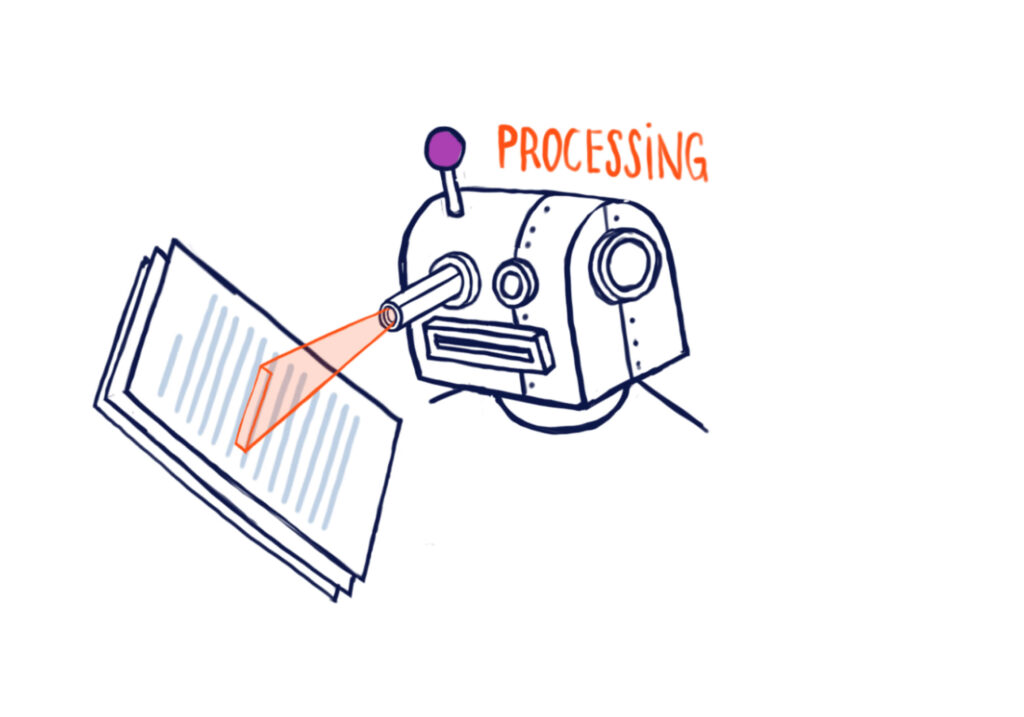
Artificial intelligence has changed the way we write, study, communicate, and create digital content. Tools such as ChatGPT, Claude, Gemini, Llama, and other large language models can produce polished text within seconds. While this technology is useful, it has also created a growing need to understand whether a piece of writing was produced by a person, generated by AI, or created through a combination of both.
A detector de IA also known as an AI detector or AI content detector, helps analyze written content for patterns commonly associated with artificial intelligence. Instead of relying on a simple keyword match, modern detection systems can examine sentence structures, word choices, writing patterns, and other linguistic signals to estimate whether content is likely to be AI-generated.
What Is a Detector de IA?
A detector de IA is software designed to evaluate text and estimate the likelihood that it was generated by an artificial intelligence system. These tools are increasingly useful for students, teachers, writers, publishers, businesses, and anyone concerned with content authenticity.
Modern AI detectors can analyze content generated by popular language models, including ChatGPT, GPT-5, Claude, Gemini, Llama, Mistral, and other AI systems. ISGen, for example, describes its detector as using advanced AI systems and language-understanding algorithms to analyze content across more than 80 languages.
The purpose is not simply to label writing as “AI” or “human.” A useful detector should provide enough information to help users understand which parts of a document may have AI-like characteristics.
How Does AI Detection Work?
Analyzing Writing Patterns
AI-generated text often has recognizable statistical and linguistic characteristics. An AI detector can examine factors such as sentence construction, vocabulary selection, repetition, predictability, and overall writing patterns.
The system processes these signals and produces an estimated result. Instead of focusing on one unusual word or sentence, advanced systems can consider the broader context of the document.
Sentence and Phrase-Level Analysis
Detailed analysis becomes particularly useful when a document contains both human-written and AI-generated material.
For example, a writer may create an article manually but use AI to rewrite a few paragraphs. A simple document-level score may not clearly explain this difference. Sentence-level and phrase-level analysis can provide a more detailed picture by identifying specific sections that contribute to an AI detection result.
ISGen’s AI detector provides overall results alongside sentence and phrase-level insights, including color-coded highlights and AI impact information.
Detecting Mixed Human and AI Content
Not every document is completely human-written or completely AI-generated. Modern workflows frequently combine human research, personal experience, editing, and AI assistance.
For this reason, an effective detector de IA should be capable of recognizing mixed writing patterns rather than treating every document as belonging to only one category.
Why Use a Detector de IA?
For Students and Educators
Educational institutions increasingly need practical ways to discuss AI-assisted writing. Students can use an AI detector to review their own work and identify sections that may appear overly automated or formulaic.
Educators can also use detection results as an additional source of information when reviewing assignments. However, an AI detection score should be considered alongside the student’s writing history, drafts, references, and other evidence rather than treated as the sole basis for an academic decision.
For Content Writers
Professional writers often want their work to sound natural, original, and consistent with their own voice. Running content through an detector de IA can help identify passages that have overly predictable or repetitive characteristics.
Writers can then revise those sections by adding clearer explanations, original observations, relevant examples, and a more natural personal writing style.
For Businesses and Publishers
Businesses publish large volumes of website copy, product descriptions, blog posts, emails, and marketing materials. Maintaining a consistent editorial standard is important for brand credibility.
AI detection can form part of a broader content-quality workflow. Combined with proofreading, plagiarism checking, fact verification, and human editorial review, it can help organizations maintain stronger content standards.
How to Use an AI Detector
Using a modern detector de IA is generally straightforward.
1. Paste or Upload Your Text
Start by entering the content you want to analyze. Depending on the platform, you may be able to paste text directly into the detection field or upload a document.
ISGen supports individual and bulk file uploads and provides support for more than 80 languages.
2. Start the Detection Scan
After submitting the content, the system analyzes the text and evaluates patterns associated with AI-generated writing.
A comprehensive detector can first examine the document as a whole and then provide more detailed analysis at the sentence or phrase level.
3. Review the Results
The result should be interpreted rather than simply accepted as an absolute judgment.
Isgen presents an overall breakdown that can distinguish between Human, AI, and Mixed content, while its detailed analysis identifies individual sentences and phrases that influence the result.
What Makes a Good Detector de IA?
Multilingual Support
AI-generated content is not limited to English. People use generative AI in Spanish, French, German, Portuguese, Indonesian, Arabic, and many other languages.
A multilingual AI detector can therefore be more useful for international users and organizations. ISGen states that its detection system supports more than 80 languages.
Detailed Results
A percentage alone does not tell the complete story. Detailed explanations can make detection results more useful because users can identify the specific sections that require closer review.
Sentence-level and phrase-level analysis can help writers understand where AI-like patterns appear instead of forcing them to reconsider an entire document.
Support for Multiple AI Models
The AI landscape changes rapidly. New language models are continually introduced, while existing systems receive updates.
A strong detecteur ia therefore needs to evaluate content against patterns associated with a broad range of AI models rather than being designed around only one generator.
Isgen currently lists models and systems including ChatGPT, GPT-5, Claude, Gemini, Llama, Mistral, and others among the technologies its detection system is designed to analyze.
Can AI Detectors Be 100% Accurate?
No AI detection system should be treated as an infallible authority.
Human writing can sometimes resemble AI-generated text, particularly when it is highly formal, repetitive, structured, or heavily edited. Likewise, AI-generated content can be modified by a person, making classification more difficult.
For this reason, an AI detector score should be treated as an analytical signal rather than definitive proof.
The most responsible approach is to combine detection results with human judgment. For academic work, this could include reviewing drafts and sources. For professional content, it could involve editorial review, fact-checking, plagiarism screening, and checking whether the writing matches the author’s established style.
Detector de IA vs. Plagiarism Checker
AI detection and plagiarism detection solve different problems.
A plagiarism checker generally looks for similarities between submitted content and existing sources. Its primary purpose is identifying potentially copied or closely matching material.
An detector de IA, on the other hand, analyzes linguistic and statistical patterns to estimate whether text may have been generated using artificial intelligence.
A document can therefore be original but still appear AI-generated, or it can be human-written while containing copied material. Using both types of analysis provides a more complete approach to content verification.
AI Detection as Part of Better Writing
The goal of AI detection should not simply be to achieve a particular percentage. Strong writing should be useful, accurate, clear, and appropriate for its audience.
When an detector de IA identifies sections with highly predictable language, writers can use the feedback constructively. They can replace vague statements with specific information, improve transitions, add meaningful examples, and introduce their own perspective.
This approach makes detection technology part of the editing process rather than simply a pass-or-fail test.
Final Thoughts on Detector de IA
The growing use of generative artificial intelligence has made content verification more important than ever. A detector de IA can provide valuable insight into whether writing contains patterns commonly associated with AI-generated content.
Modern detection tools can go beyond a basic document score by examining sentences, phrases, language patterns, and mixed human-AI writing. Platforms such as ISGen also combine AI detection with other writing technologies, including plagiarism checking, AI editing, proofreading, and humanization tools.
The strongest results come from using detector de IA responsibly. Instead of treating one percentage as unquestionable proof, users should examine the detailed findings and consider the context in which the content was created.
For More Relevant Blogs: Click here