Wardrobe Dubai
Introduction: Creating Smarter Storage with Wardrobe Dubai
A well-designed wardrobe is an essential part of a comfortable and organised home. It provides a dedicated place for clothing, accessories, footwear, bedding, and personal belongings while contributing to the overall appearance of a bedroom. In modern homes, storage is no longer limited to a simple cupboard. Homeowners increasingly prefer practical designs that combine attractive finishes, intelligent layouts, and efficient use of available space. Wardrobe Dubai reflects this growing interest in customised storage solutions that bring together contemporary style and everyday convenience.
Choosing the right Wardrobe Dubai design involves considering more than its external appearance. The internal arrangement, door style, dimensions, materials, lighting, and storage accessories all influence how effectively a wardrobe serves its purpose. A carefully planned design can make a compact bedroom feel more organised, while a spacious fitted wardrobe can introduce a refined and luxurious touch to a larger interior.
With Wardrobe Dubai solutions, homeowners can explore different configurations that suit their room layouts, personal preferences, and storage requirements. From minimalist sliding-door wardrobes to floor-to-ceiling fitted installations, custom designs offer flexibility that standard furniture may not provide. The right choice helps maximise available storage without compromising the visual balance of the bedroom.
Why Modern Wardrobe Designs Are Important for Contemporary Homes
Modern homes require furniture that supports both functionality and visual appeal. Bedrooms often contain clothing, shoes, accessories, travel bags, and other personal items that need organised storage. Without a suitable arrangement, these belongings can create clutter and make the room feel smaller.
A modern wardrobe provides an organised solution by dividing storage into practical sections. Hanging rails, shelves, drawers, shoe compartments, and accessory organisers help homeowners arrange belongings according to their needs. This makes everyday routines easier and reduces the time spent searching for specific items.
Another important consideration is the relationship between furniture and interior design. A wardrobe occupies a noticeable portion of the bedroom, so its appearance can influence the entire space. Contemporary designs use clean lines, coordinated colours, elegant handles, and carefully selected materials to create a balanced interior.
Popular Wardrobe Dubai Designs for Modern Bedrooms
Different homes require different wardrobe styles. The most suitable option depends on available space, ceiling height, room layout, and the quantity of belongings that need to be stored.
Sliding Door Wardrobes for Space-Saving Interiors
Sliding-door wardrobes are a practical choice for bedrooms where space is limited. Unlike traditional hinged doors, sliding panels move along tracks and do not require additional clearance when opened. This makes them suitable for rooms with narrow walkways or furniture positioned close to the wardrobe.
These wardrobes can also create a streamlined appearance. Large panels provide an opportunity to introduce decorative finishes, glass surfaces, mirrors, or subtle textures. Mirrored sliding doors can make a smaller bedroom appear brighter and more spacious by reflecting natural and artificial light.
The internal layout can be customised with hanging sections, shelves, drawers, and dedicated compartments. Homeowners can select the number of panels and the overall dimensions according to the available wall space.
Walk-In Wardrobes for Spacious Storage
Walk-in wardrobes offer a dedicated area for organising clothing, shoes, accessories, and other personal belongings. They are particularly suitable for larger bedrooms or homes with a separate dressing area.
A walk-in design can include storage on one or more walls, depending on the room’s dimensions. Open shelving, hanging rails, drawer units, and display sections can be arranged to create a convenient dressing environment.
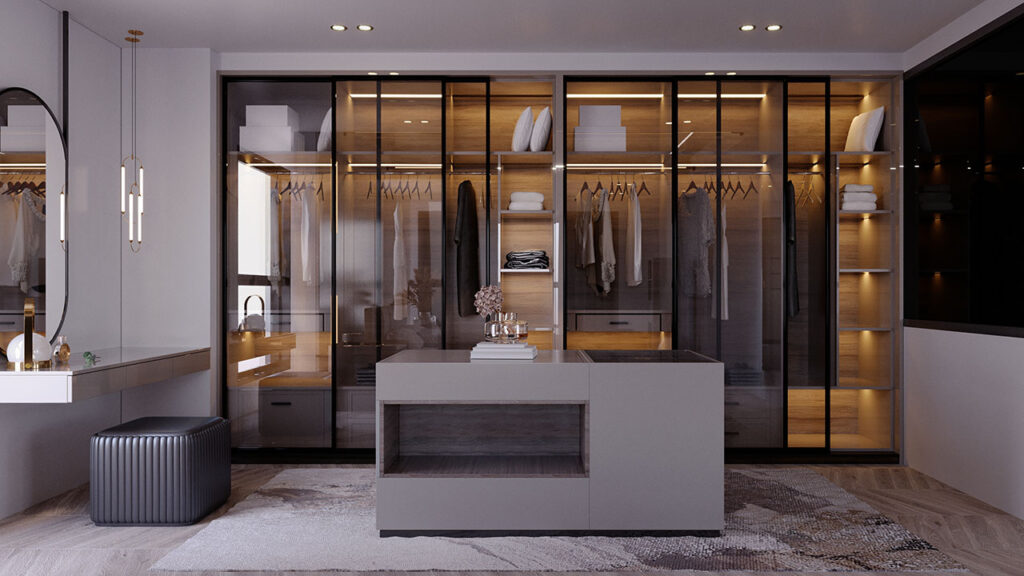
Lighting plays an important role in these spaces. Ceiling lights, recessed lighting, and integrated shelf illumination improve visibility while adding a sophisticated appearance. A central island may also be included when sufficient space is available, providing additional drawers and a surface for organising accessories.
Built-In Wardrobes for Seamless Room Integration
Built-in wardrobes are designed to fit the dimensions of a particular room. They can extend from floor to ceiling, making use of vertical space that might otherwise remain unused.
This design is especially useful in bedrooms with unusual wall dimensions, alcoves, sloped ceilings, or limited floor space. Custom measurements help create a more integrated appearance while reducing unnecessary gaps around the furniture.
Built-in wardrobes can be designed with hinged or sliding doors. Their finishes can match the bedroom’s flooring, wall colours, or other furniture to create a consistent interior theme.
Hinged Door Wardrobes for Classic Functionality
Hinged wardrobes remain a popular option because they provide full access to the internal storage area. Their doors open outward, allowing homeowners to view the contents of the wardrobe more easily.
This style is available in traditional, transitional, and contemporary designs. Options include simple flat panels, framed doors, decorative handles, and modern handleless finishes.
Hinged wardrobes are particularly suitable for bedrooms with enough clearance in front of the furniture. Their internal layout can include adjustable shelves, drawers, hanging rails, and specialised organisers.
Corner Wardrobes for Underused Spaces
Corners are sometimes difficult to furnish effectively, especially in compact bedrooms. A custom corner wardrobe can transform an unused area into practical storage.
These wardrobes may feature angled doors, L-shaped configurations, or specially designed internal compartments. The layout should provide comfortable access to clothing and stored belongings while maintaining sufficient movement space within the room.
Corner wardrobes are useful for homeowners who want to increase storage capacity without occupying an entire wall.
Custom Wardrobe Designs: Making the Most of Available Space
One of the main advantages of custom furniture is the ability to plan storage around individual requirements. Standard wardrobes may not use every available centimetre, particularly in rooms with unusual dimensions. Custom designs address this challenge through accurate measurements and personalised layouts.
Floor-to-Ceiling Storage Solutions
Floor-to-ceiling wardrobes make use of the full height of a room. The lower sections can hold frequently used clothing, shoes, and accessories, while the upper compartments provide space for seasonal garments, luggage, and bedding.
This arrangement is useful for homeowners who need more storage but have limited floor area. It also creates a clean, continuous appearance that can make the bedroom look more organised.
Upper compartments should be planned with accessibility in mind. Items used less frequently can be stored higher up, while everyday belongings should remain within comfortable reach.
Wardrobes Designed for Small Bedrooms
A compact bedroom requires careful furniture planning. Large wardrobes with outward-opening doors may restrict movement, while poorly arranged shelves can waste valuable internal space.
Sliding doors, narrow drawer units, vertical shelving, and built-in configurations can help improve storage efficiency. A wardrobe with a simple exterior can also reduce visual clutter.
Light-coloured finishes and mirrored panels may help create a more open appearance. However, the most important factor is choosing dimensions that leave enough space for comfortable movement around the bedroom.
Storage Around Windows and Architectural Features
Some bedrooms include windows, columns, alcoves, or structural features that affect furniture placement. Custom wardrobe planning can account for these elements rather than forcing a standard design into an unsuitable area.
For example, storage can be arranged around an alcove or along a wall that does not interfere with window access. The design should preserve natural light, ventilation, and convenient access to doors and other room features.
Essential Internal Wardrobe Storage Features
The internal arrangement determines how useful a wardrobe will be in everyday life. A beautiful exterior may look impressive, but an effective interior makes the furniture practical.
Hanging Rails for Different Clothing Types
Hanging rails are essential for garments that need to maintain their shape. Long dresses, coats, and formal clothing require taller hanging sections, while shirts, trousers, and shorter garments can be arranged in more compact spaces.
Double hanging rails can increase capacity by creating separate upper and lower sections. Their positioning should be based on the types of clothing the homeowner owns.
Adjustable Shelves for Flexible Organisation
Adjustable shelves provide flexibility as storage needs change. They can accommodate folded clothes, handbags, storage boxes, towels, and other belongings.
A combination of wide and narrow shelves allows different items to be arranged efficiently. Adjustable systems are especially useful for growing households or people whose clothing collections change over time.
Drawers for Personal Accessories
Drawers provide enclosed storage for smaller belongings that may otherwise become difficult to organise. They are useful for socks, undergarments, belts, scarves, watches, and other accessories.
Soft-close drawer runners can improve everyday convenience by allowing drawers to close smoothly. Internal dividers can also help separate different items and maintain an orderly arrangement.
Dedicated Shoe Storage
Shoes can take up considerable space when they are stored without a proper arrangement. Dedicated shoe shelves, angled racks, pull-out units, and lower compartments can make footwear easier to access.
The number and dimensions of shoe sections should reflect the household’s requirements. Frequently worn footwear can be placed in accessible lower sections, while occasional footwear can be stored elsewhere.
Specialised Accessories and Organisers
Modern wardrobes can include practical accessories such as pull-out trouser racks, tie holders, belt organisers, jewellery trays, and handbag compartments.
These features help keep smaller belongings in designated places. They can also make a wardrobe easier to maintain because each category of item has its own storage area.
Choosing the Right Materials for a Custom Wardrobe
Material selection influences durability, appearance, maintenance, and overall design quality. The ideal material depends on the desired finish, budget, and intended use.
MDF for Versatile Wardrobe Finishes
Medium-density fibreboard, commonly known as MDF, is widely used in fitted furniture. Its smooth surface makes it suitable for painted finishes, laminates, and decorative panels.
MDF can support a range of contemporary designs, including flat doors and detailed profiles. The quality of the board, edge treatment, hardware, and installation all contribute to the finished result.
Plywood for Structural Applications
Plywood is made from layers of wood veneer bonded together. It is used in different furniture applications because of its layered construction and structural properties.
Its suitability depends on the grade, thickness, manufacturing quality, and environmental conditions. Selecting an appropriate specification is important when planning wardrobe cabinets and internal structures.
Laminate Finishes for Practical Surfaces
Laminate finishes are available in many colours, patterns, and textures. They can imitate natural wood, stone-inspired surfaces, or smooth contemporary finishes.
They are often selected for their design variety and relatively straightforward maintenance. Homeowners should compare surface quality, edge finishing, and resistance to everyday wear before making a decision.
Glass and Mirror Panels for Contemporary Designs
Glass and mirror panels can introduce a modern appearance to wardrobe doors. Frosted glass creates a softer visual effect, while clear or tinted glass offers a different decorative style.
Mirrored panels are particularly useful in dressing areas because they provide a convenient full-length reflection. The glass specification and installation method should be selected with safety and durability in mind.
Natural Wood Finishes for Warm Interiors
Wood-inspired and natural wood finishes bring warmth to bedroom interiors. They can complement neutral colours, textured fabrics, and minimalist furniture.
Depending on the design, homeowners may choose solid wood, veneer, or wood-effect finishes. Each option has different characteristics in terms of appearance, maintenance, and cost.
Wardrobe Dubai Design Trends for Modern Interiors
Interior design preferences continue to evolve, and wardrobes increasingly form part of a coordinated bedroom environment. Current design approaches often focus on simplicity, useful storage, and carefully selected finishes.
Minimalist Wardrobes with Clean Lines
Minimalist wardrobes feature simple shapes, uncluttered surfaces, and subtle details. Handleless doors, concealed storage, and neutral colours are commonly used to create a calm appearance.
This style works well in contemporary bedrooms where furniture is intended to complement rather than dominate the interior.
Neutral Colours and Natural Textures
Beige, cream, white, grey, and soft brown tones are popular choices for modern bedroom furniture. These colours can create a balanced background and coordinate easily with different interior styles.
Natural wood textures can add visual warmth, while matte finishes offer a restrained and understated appearance.
Integrated LED Wardrobe Lighting
Lighting improves the functionality of wardrobe interiors. LED strips can be installed inside cabinets, beneath shelves, or around hanging sections to improve visibility.
Some designs use sensor-based lighting that activates when a wardrobe door opens. This can make it easier to find clothing without relying entirely on the bedroom’s main lighting.
Mixed Materials and Decorative Panels
Combining materials can add depth and character to a wardrobe. For example, wood-effect panels may be paired with glass, metal details, or contrasting finishes.
The key is to maintain visual balance. Too many different textures or colours can make the bedroom appear busy, so material combinations should complement the wider interior design.
How to Plan a Wardrobe That Meets Your Storage Needs
Before choosing a design, homeowners should identify what they need to store and how frequently they use different belongings.
Assess Your Clothing and Storage Requirements
Start by reviewing the types of items that will be stored. A household with many formal garments may need more hanging space, while someone with a large collection of folded clothing may prefer additional shelves and drawers.
Footwear, handbags, accessories, bedding, and travel items should also be considered. Understanding these requirements helps determine the appropriate internal configuration.
Measure the Bedroom Carefully
Accurate measurements are essential for a successful installation. Record the available wall width, ceiling height, floor space, and distance from nearby doors and windows.
It is also important to identify sockets, switches, air-conditioning units, skirting boards, and other features that may affect the design. Professional measurements can help reduce the risk of fitting problems.
Choose a Suitable Door Configuration
The choice between sliding and hinged doors should be based on room dimensions and daily habits. Sliding doors can be useful where clearance is limited, while hinged doors provide full access to the wardrobe interior.
The selected system should operate smoothly and be appropriate for the size and weight of the doors.
Plan for Future Storage Needs
A wardrobe should not only accommodate current belongings but also allow some flexibility. Adjustable shelves, additional drawers, and versatile hanging sections can make the design more useful over time.
Planning for future requirements may prevent the need for major changes later.
How Wardrobes Improve Bedroom Organisation
A thoughtfully arranged wardrobe can make everyday routines more convenient. When clothing and accessories have designated locations, it becomes easier to maintain an orderly bedroom.
Separate sections can be assigned to workwear, casual clothing, formal outfits, and seasonal garments. Frequently used items can be positioned at accessible heights, while occasional belongings can be placed in upper compartments.
Storage baskets and internal dividers can further improve organisation. They are particularly useful for smaller accessories that may become mixed together in larger drawers.
A well-planned wardrobe also reduces the need for additional storage furniture. This can free up floor space for other bedroom essentials and create a more balanced interior.
Custom Wardrobe Installation: What Homeowners Should Consider
A good design requires careful installation. Even well-selected materials and attractive finishes may not deliver the intended result if the wardrobe is incorrectly measured or fitted.
Professional Measurement and Design Planning
The process should begin with an assessment of the room and a discussion of storage requirements. Measurements are then used to prepare a design that reflects the available dimensions.
A clear design plan should identify cabinet sections, door configurations, internal accessories, finishes, and lighting requirements. Reviewing these details before manufacturing helps ensure that the final product meets expectations.
Quality Hardware and Smooth Operation
Hinges, drawer runners, sliding tracks, handles, and other fittings influence how a wardrobe performs over time. Hardware should be selected according to the weight and frequency of use of each component.
Soft-close mechanisms can provide controlled movement, while suitable sliding systems help doors operate smoothly. Quality fittings contribute to the overall usability of the furniture.
Finishing and Final Inspection
Before installation is considered complete, the wardrobe should be checked for alignment, door movement, drawer operation, and surface finishing.
Shelves should be level, doors should open or slide correctly, and visible edges should have a neat appearance. A final inspection helps identify any adjustments that may be required.
Factors That Influence the Cost of a Custom Wardrobe
The cost of a wardrobe depends on several design and manufacturing decisions. Understanding these factors can help homeowners plan a solution that meets their requirements and budget.
The overall dimensions are one of the main considerations. Larger wardrobes generally require more materials, hardware, and installation work. Floor-to-ceiling configurations and walk-in designs may also involve more detailed planning.
Material selection can affect the total price. Different board grades, wood finishes, laminates, glass panels, and decorative surfaces have different costs. The type of hardware and accessories also influences the final estimate.
Additional features such as integrated lighting, specialised shoe storage, pull-out organisers, mirrored doors, and soft-close mechanisms may increase the overall investment.
Installation requirements should also be considered. Complex room layouts, unusual dimensions, and customised door systems may require additional work.
For an accurate estimate, homeowners should request a detailed quotation that explains the dimensions, materials, internal fittings, finishes, and installation scope.
Maintaining Your Wardrobe for Long-Term Use
Regular care helps keep wardrobe surfaces and internal compartments in good condition. The appropriate cleaning method depends on the material and finish.
Dust can be removed with a soft, dry or slightly damp cloth. Cleaning products should be suitable for the specific surface, and excessive moisture should be avoided around cabinet edges and joints.
Mirrored and glass panels can be cleaned with products intended for those surfaces. Hardware should be checked periodically to ensure that hinges, handles, and sliding mechanisms remain properly aligned.
It is also useful to review the wardrobe’s contents occasionally. Removing unused belongings and rearranging seasonal clothing can help maintain an organised interior.
Conclusion: Transform Your Bedroom with Wardrobe Dubai
A thoughtfully designed wardrobe can improve bedroom organisation, maximise available storage, and enhance the overall appearance of a home. From sliding-door and built-in designs to spacious walk-in configurations, the right solution depends on the room’s dimensions, personal storage requirements, and preferred interior style.
Modern Wardrobe Dubai designs offer opportunities to combine practical internal arrangements with attractive finishes and contemporary details. Features such as adjustable shelves, dedicated shoe compartments, integrated lighting, and specialised organisers can make everyday storage more convenient.
When planning Wardrobe Dubai furniture, homeowners should consider measurements, materials, hardware, door configurations, and installation quality. A well-planned custom wardrobe can provide an organised and visually balanced storage solution that supports changing household needs while making better use of available bedroom space.
Frequently Asked Questions About Wardrobe Dubai
1. What are the most popular wardrobe designs in Dubai?
Popular options include sliding-door wardrobes, hinged wardrobes, built-in wardrobes, walk-in wardrobes, and corner wardrobes. The most suitable design depends on bedroom dimensions, storage requirements, and personal preferences.
2. Are custom wardrobes better than standard wardrobes?
Custom wardrobes can be more suitable when homeowners need specific dimensions, internal arrangements, or finishes. They can make better use of unusual spaces and provide storage sections designed around individual requirements.
3. Which wardrobe design is best for a small bedroom?
Sliding-door and built-in wardrobes are often practical choices for compact bedrooms. They can reduce the space required for door movement and make efficient use of available wall and vertical space.
4. What materials are commonly used for modern wardrobes?
Common materials include MDF, plywood, laminates, wood veneer, glass, and mirror panels. The right choice depends on the desired appearance, construction requirements, maintenance preferences, and budget.
5. How can I maximise storage inside a wardrobe?
Use a combination of hanging rails, adjustable shelves, drawers, shoe compartments, and accessory organisers. Dividing the interior according to clothing categories can also make better use of available space.
6. Are sliding wardrobes suitable for every bedroom?
Sliding wardrobes are useful in rooms where door clearance is limited. However, the wall dimensions, track system, and internal access requirements should be considered before selecting this configuration.
7. What is the benefit of a floor-to-ceiling wardrobe?
A floor-to-ceiling wardrobe uses vertical space that may otherwise remain unused. Its upper compartments can store seasonal clothing, luggage, and other occasional belongings, while lower sections remain accessible for everyday items.
8. Can wardrobe lighting be included in a custom design?
Yes. LED strips, recessed lights, and sensor-based lighting can be incorporated into many custom wardrobe designs. These features improve visibility and make it easier to locate clothing and accessories.
9. What should I consider before ordering a custom wardrobe?
Consider the available dimensions, storage requirements, door style, material, finish, hardware, lighting, and installation arrangements. A detailed design plan and quotation can help clarify what is included.
10. How do I maintain a modern wardrobe?
Clean the surfaces using products suitable for their finishes, avoid excessive moisture, and periodically check hinges, handles, and sliding tracks. Keeping the interior organised also helps maintain convenient access to stored belongings.