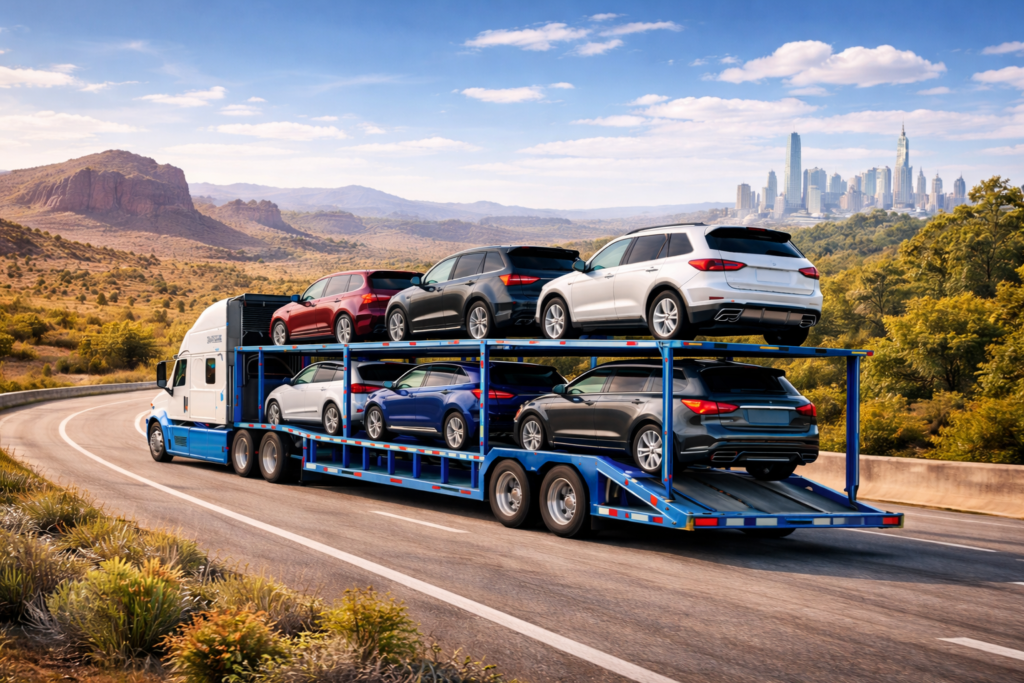
Shipping a vehicle that cannot move under its own power—known in the industry as an “In-Op” (inoperable) shipment—requires more than just a standard trailer. Whether you’re moving a classic project car, a salvage auction win, or a vehicle with a seized engine, non running vehicle transport relies on mechanical leverage and specialized gear to get the job done safely.
In 2026, roughly 15% to 20% of all auto transport involves non-running units. Understanding the equipment involved can help you avoid failed pickup attempts and unexpected fees.
1. The Core Equipment: The Winch
The most common tool for loading an inoperable car is the winch. This is a motorized cable system mounted to the front of the transport trailer.
- How it Works: The driver attaches a high-strength hook or nylon strap to a secure point on your vehicle’s frame or tow eye. The winch then slowly “inches” the car up the ramps and onto the deck.
- Requirements: For a winch to work effectively, the vehicle must be able to roll and steer. If the tires are flat or the steering column is locked, a winch alone may not be enough.
- Powered vs. Manual: In 2026, most professional carriers use heavy-duty electric or hydraulic winches capable of pulling up to 9,000 lbs.
2. Specialized Gear for Immobile Vehicles
If your car doesn’t roll or steer, carriers must pivot to more advanced “transportation wizardry.”
- Wheel Dollies & Skates: If the wheels are seized or the tires are shredded, drivers place “skates” or dollies under the tires. These act as mini-rollers, allowing the winching process to proceed without dragging the vehicle’s metal components across the trailer floor.
- Hydraulic Liftgates: Common in Enclosed Transport, a liftgate acts like a massive elevator. Instead of winching the car up an incline (ramps), the entire platform lowers to the ground. The car is pushed or winched onto the flat platform and lifted levelly into the trailer—essential for low-clearance luxury cars that don’t run.
- Forklifts: Usually reserved for salvage yards or large terminals, a forklift may be required to place a vehicle onto a trailer if it is missing axles or wheels entirely.
3. The Cost of “In-Op” Service
Because of the extra labor, specialized equipment, and limited carrier availability, non-running vehicle transport costs more than standard shipping. In 2026, expect the following non running vehicle transport price shifts:
- Winch Fee: Typically adds $150 to $300 to your base quote.
- Roll/Steer/Brake (RSB) Factor: A car that rolls and steers is the “cheapest” non-runner. If it cannot steer or brake, the fee may climb toward the $400+ range due to the extreme difficulty of loading.
- Carrier Availability: Only about 1 in 4 open-air carriers are equipped with a winch. This lower supply often results in longer dispatch times and higher market “spot” prices.
4. Why Rapid Auto Shipping is Your Best 2026 Partner
Transporting an inoperable vehicle requires a level of expertise that standard “drive-on” carriers simply don’t have.
$0 Upfront Booking
Don’t pay for a “maybe.” Our $0 upfront booking policy means you don’t pay a cent until we have confirmed a carrier that has the specific winch or liftgate equipment required for your car’s condition.
The Rapid Price Match Philosophy
Specialized transport shouldn’t mean inflated prices. If you find a legitimate quote from another reputable 2026 provider for an inoperable move, we will work to match it while ensuring the quality of equipment remains top-tier.
50,000+ Vetted Carriers
We filter our network of 50,000+ carriers specifically for “In-Op” specialists. We verify that the assigned driver has a functioning, high-capacity winch and the necessary insurance to cover the unique risks of loading non-running vehicles.
Conclusion: Honesty Saves Money
The most important step in non-running vehicle transport is disclosure. If the driver arrives and finds a car with a locked steering column that was booked as a “rolling” unit, the pickup will likely fail, and you may be charged a dry-run fee. Always be upfront about the tires, steering, and brakes. By choosing a carrier with the right winching equipment and a transparent pricing model, you can get your project car home safely without the headache of hidden surcharges.